Hello and happy Friday. We got a call yesterday from a new prospect. No referral. No cold outreach. Just someone who went to Google, searched for “AI SEO webinar,” and found us at the top of the results.
This keeps happening. And every time it does, we’re reminded why hosting educational events has become one of the most powerful lead generation channels we have at Boulder SEO Marketing. Watch the video above to learn more.
Here’s the thing: most businesses treat webinars like an afterthought. Something they’ll get around to “eventually.” We get it. Between running operations and serving clients, who has time to plan an online event? But after hosting dozens of these over the past few years, we can tell you with absolute certainty that educational events are generating higher-quality leads than almost anything else we do.
Why Webinars Work So Well Right Now
There’s a reason this strategy is hitting differently in 2026 than it did even two years ago. The landscape has fundamentally shifted. Google’s AI Overviews are pulling content directly from video sources. YouTube remains the second-largest search engine in the world. And people are increasingly seeking out live, interactive experiences where they can ask questions and get real answers.
When our founder, Chris Raulf, sat down with Eric Elkins, CEO of WideFoc.us, to record this week’s Friday SEO Tip, they talked about how both agencies have built consistent lead pipelines through educational events. Eric has been doing LinkedIn Live webinars for nearly a year now, and what struck us about his approach was its practicality. He didn’t wait until everything was perfect. He just set a date, announced it publicly, and forced himself to execute.
That’s the part most people miss. The procrastination cycle is real. You think you need better slides, a more polished setup, and the perfect topic. But the reality is that done beats perfect every time. Once you publicly commit to a date, you’ve created accountability. You have no choice but to show up.
The Co-Hosting Advantage
If it’s just one person talking for an hour, things can get dry. That’s why we’ve started co-hosting more frequently. When Eric invited Chris to speak at his upcoming webinar titled “Align AI SEO and Social to Get in Search Summaries” on February 20, 2026, 11:00 AM – 12:00 PM MST, we immediately wanted to return the favor by bringing him on our Friday SEO Tip.
This approach does two things. It makes the content more engaging because you’re having a back-and-forth conversation rather than a monologue. And it expands your reach because both hosts are promoting to their respective audiences. Eric’s followers see Boulder SEO Marketing. Our audience discovers WideFoc.us. Everybody wins.
We’re also rotating our team members into Friday SEO Tips now. For years, it was just Chris. But building E-E-A-T signals for the entire team matters. When Barb Senkala, Harold De Guzman, or Daniel Burns hosts a tip, they’re building their own authority while representing the company. Fresh perspectives keep things interesting and distribute the content creation workload across the team.
The Mechanics That Matter
Let us walk you through how we structure these events, because the details actually matter.
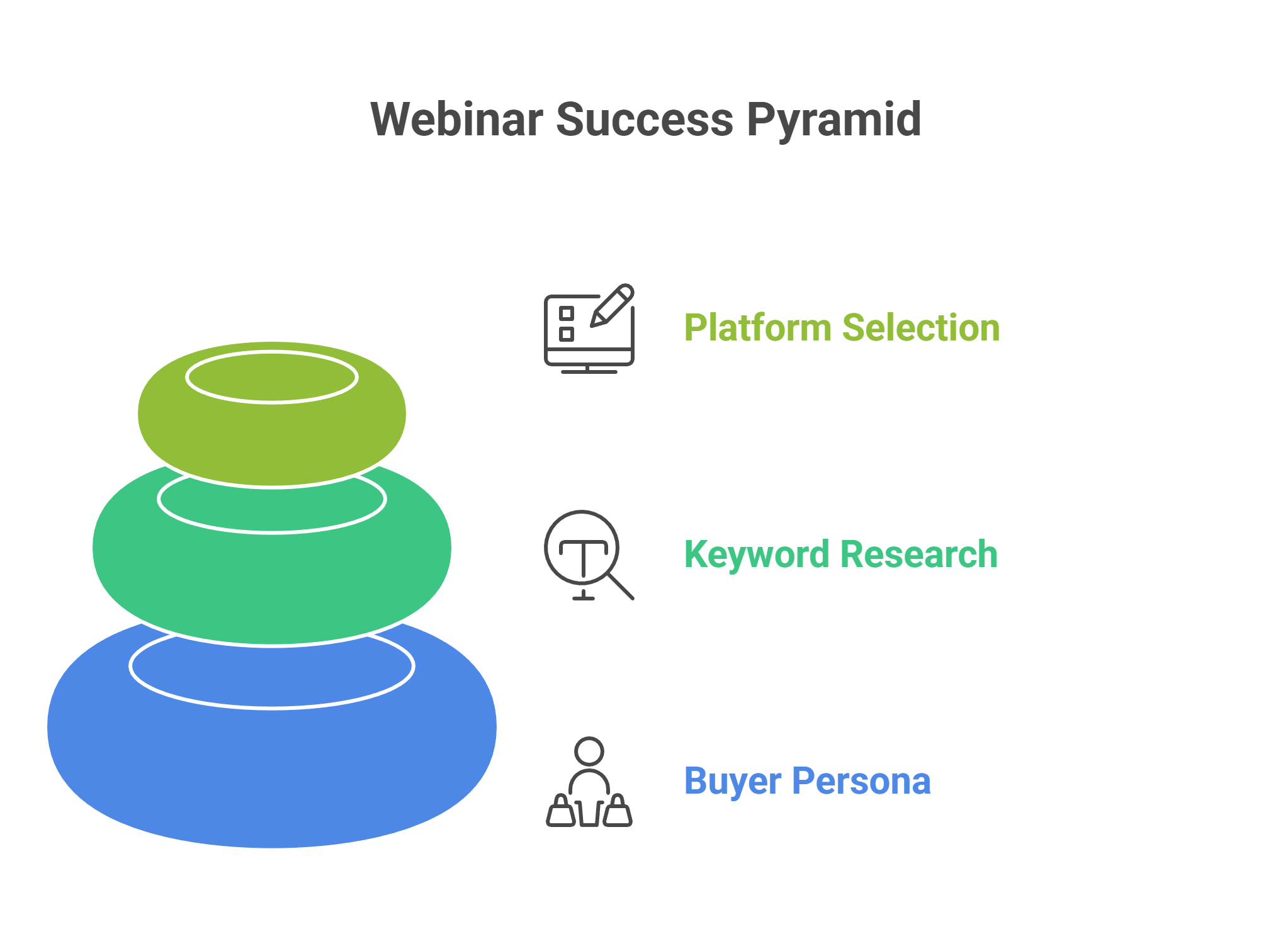
- Buyer persona. Before we write a single word of content for a webinar, we’re clear on exactly who we want in that virtual room. What’s their job title? What are their pain points? What keeps them up at night? This sounds basic, but you’d be shocked at how many businesses skip this step and then wonder why their webinar attracted the wrong audience. If you’re a local plumber hosting a webinar about “digital marketing best practices,” you’ve already lost. The topic needs to connect directly to what your ideal customer is actively searching for. We’ve included a buyer persona worksheet in our free webinar planning template to help you think this through.
- Keyword research. This is where most people don’t realize that webinars and SEO intersect. When we host a webinar through Eventbrite, that landing page can actually rank in Google. Not just for branded searches, but for keywords people are actively using. Right now, if you search for “AI SEO webinar,” our Eventbrite registration page shows up near the top. We optimize the title, description, and content with keywords we’ve researched using SE Ranking. The same principles apply to your webinar landing pages on your own website.
- Platform selection. We’ve tested several approaches. For registration, Eventbrite has been phenomenal. Google seems to love it; the cost per click for advertising events is surprisingly low (sometimes in the single digits), and you actually get email addresses you can use for follow-up. The one limitation Eric mentioned with LinkedIn Live is that you don’t get exportable email addresses. You can see who attended and their job titles, but moving them into your CRM takes extra work.
For the actual broadcast, we still use Zoom because it streams directly to YouTube. That matters because the recording becomes a permanent asset that continues generating views and leads long after the live event ends. Eric’s team uses StreamYard through LinkedIn Live, which gives them flexibility and keeps everything within the LinkedIn ecosystem where their audience already spends time.
What Happens After the Event
This is where most people leave money on the table. The webinar itself is just the beginning.
Every webinar we host is uploaded to our YouTube channel, optimized with keywords, and added to our content library. These videos consistently rank in Google’s video carousel. When someone searches “Denver SEO” and clicks the Videos tab, we dominate that section. Friday SEO tips, webinar recordings, and podcast interviews. All of it compounds over time.
Eric makes an excellent point about content repurposing. Every webinar is:
- Goldmine of clips
- Short quotes
- Interesting segments
- Key takeaways
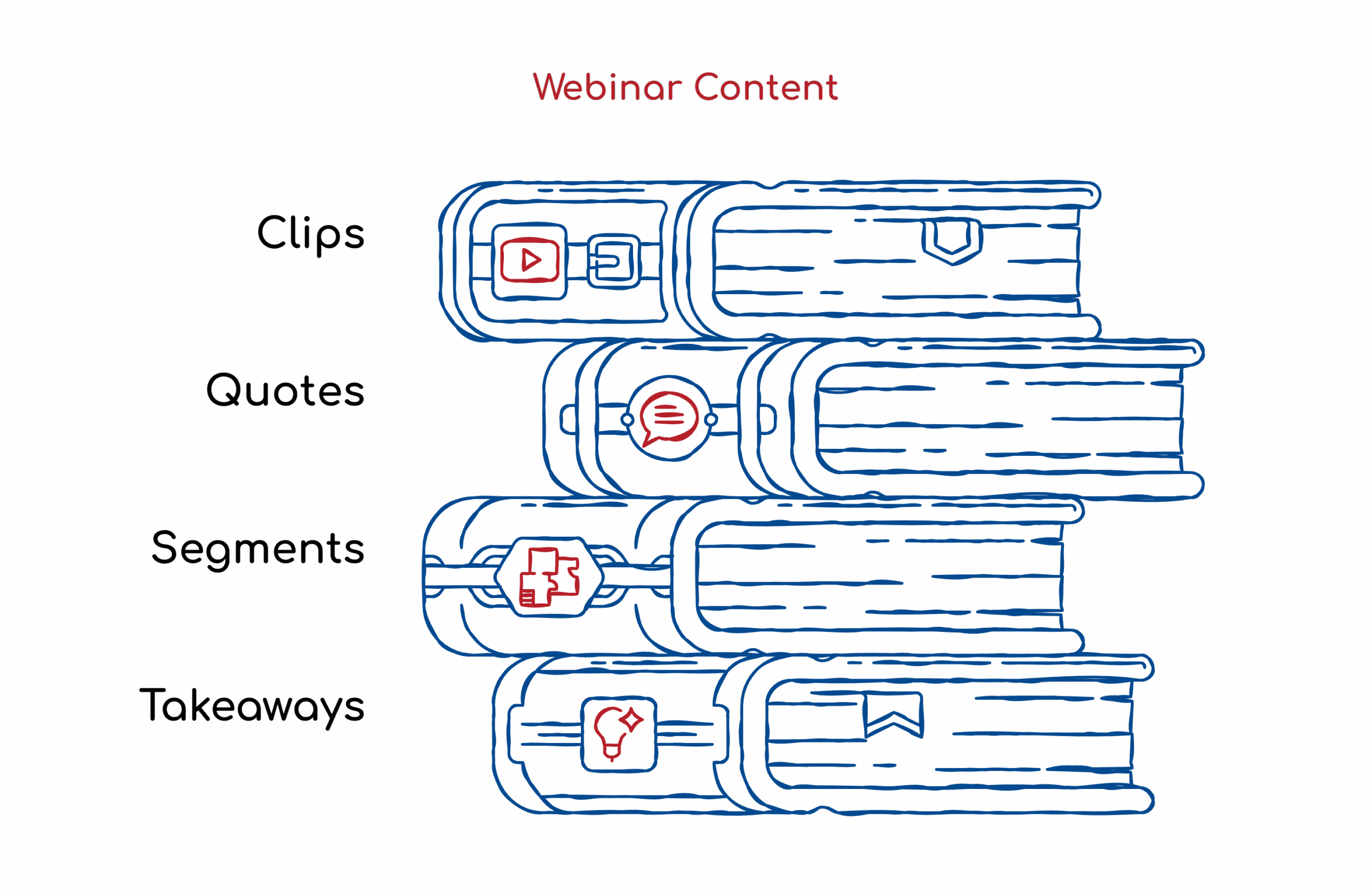
These become social content, blog posts, and email sequences. One 60-minute webinar can generate months of content if you approach it strategically.
We recently hosted an AI SEO webinar that attracted nearly 600 sign-ups. The recording now lives on YouTube, continues to get views, and still generates leads months later. That’s the compounding effect we’re talking about. You do the work once, and it keeps paying dividends.
Platform Deep Dive: Our Recommendations
If you’re just getting started, here’s our honest take on platform selection.
For registration, Eventbrite wins for most use cases. The SEO benefits alone make it worthwhile. Your event pages can rank organically, you get full access to attendee email addresses, and the advertising costs are remarkably low. We’ve seen CPCs in the single-digit cents for event promotion.
LinkedIn Live works beautifully if your audience already lives on LinkedIn and you’re focused on B2B thought leadership. The trade-off is limited email capture, but native engagement and content that stays permanently on your profile can be valuable.
For broadcasting, Zoom’s YouTube integration is hard to beat. You get the live interaction plus automatic archiving to the world’s second-largest search engine. StreamYard offers more flexibility for multi-platform streaming if that’s your priority.
The key is picking a stack and committing to it. Don’t let platform analysis paralysis stop you from setting that first date.
Your Action Step
Here’s what we want you to do this week: pick a date. Six weeks from now. Create an Eventbrite event for a topic your ideal customer actually cares about. Make it educational, not salesy. Then promote it through your existing channels.
You’ll figure out the slides and the talking points along the way. But the date creates the commitment. And the commitment creates the result.
Grab our free template and checklist that walks through every step of webinar planning, from buyer persona development to keyword research to post-event follow-up. Make 2026 the year you stop treating webinars as optional.
Until next time, and don’t hesitate to reach out if you have questions.
Stay safe and healthy,
The Boulder SEO Marketing Team