Hello and happy Friday! Here’s a question worth sitting with: when someone searches for what you do using ChatGPT, Perplexity, or Google’s AI Overviews, do you show up?
Not in the blue links. In the AI-generated answer itself. Watch the full video above to learn more.
At Boulder SEO Marketing, about 30% of our new leads now come from people who found us through large language models. That’s a real number from our own data, not a projection. Think about what that means for a moment. Nearly one in three people who become our clients didn’t find us through a traditional Google search. They asked an AI a question, and our name came up in the answer. That shift is already underway, and the businesses that understand it now will have a significant advantage over the next 12 to 18 months.
These platforms, including ChatGPT, Perplexity, and Gemini, pull content from across the web. LinkedIn, Reddit, Quora, TikTok, Instagram, X, and more. But here’s what most people don’t know: YouTube is the single most cited resource in Google’s AI Overviews. Not a blog post. Not a whitepaper. A video. And the businesses that are consistently publishing quality video content on YouTube right now are quietly building one of the most powerful GEO signals available.
This week’s Friday SEO Tip is about three GEO signals that, when stacked together, significantly improve your chances of appearing in AI-generated search results: YouTube video creation, expert contributions through Featured.com, and claiming your Google Knowledge Panel. CMPCCOAD, our framework for contextual multi-platform content creation, optimization, and distribution, is the strategic thread that ties all three together. Let’s walk through each one.
YouTube Is Not Optional Anymore
If you’re still treating YouTube as a “nice to have,” this is your sign to reconsider. We know this isn’t what most business owners want to hear. Getting on camera feels uncomfortable. Editing takes time. Publishing consistently requires discipline. But the data is clear, and we showed this live in the tip with a real incognito search.
We searched for “SEO price guide,” one of our most important keywords. Google returned an AI Overview, which now happens in roughly 50 to 60 percent of searches. Within that AI Overview, under the “value-based pricing” section, four YouTube videos were cited directly. Not linked to from a blog post. Actually embedded and cited within the AI-generated response. Scroll further down to the full list of cited sources, and YouTube appears again and again.
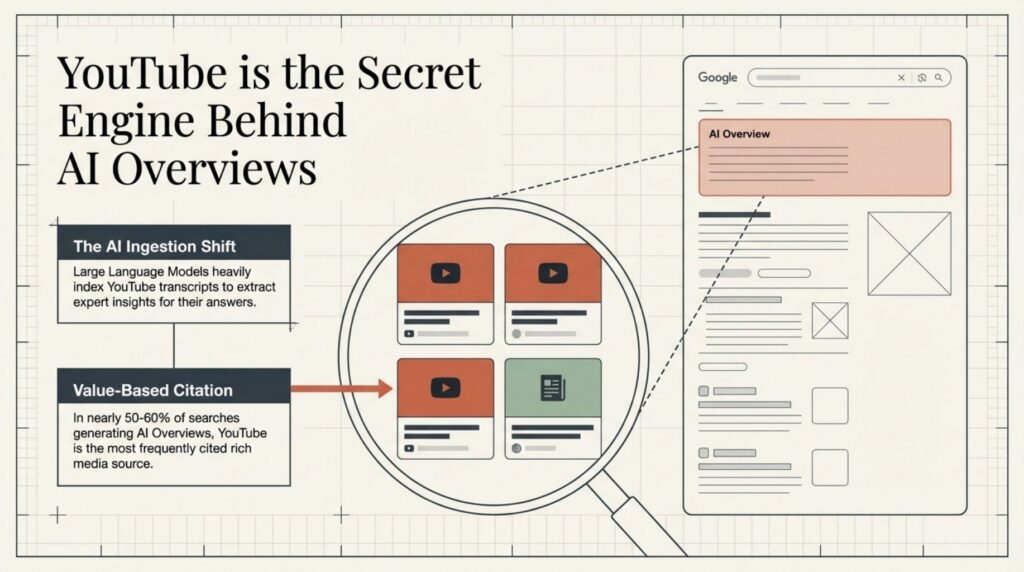
This isn’t a coincidence. Google trusts YouTube content because it owns the platform and because video content signals a real person with real knowledge is behind it. AI systems are looking for authentic expert signals, and a person talking confidently and accurately about a topic on video is one of the strongest signals you can send.
The bar for getting started is lower than you think. You don’t need a production studio or professional lighting. What you need is a consistent cadence of videos that genuinely share useful information on topics your audience is searching for. We use Riverside for recording, which makes the process significantly easier than a traditional video shoot. Start with one video per week. Pick a common question you get from clients. Answer it thoroughly. Publish it. That’s the foundation.
Featured.com Builds the Authority Backlinks That AI Platforms Notice
Featured.com is a platform we’ve been using for a while now, and it’s one of the most underrated E-E-A-T tools available to experts and business owners. This week, we’re also excited to share that its CEO and founder, Brett Farmiloe, will be speaking at our upcoming AI SEO & GEO Online Summit. It’s well worth registering just to hear him explain how the platform works and how to use it effectively.
Here’s the core mechanic. Publishers and media outlets post questions on Featured.com seeking expert input on specific topics. You browse the available requests, submit a response with genuine expertise, and, if the publisher selects your contribution, it will be published in a roundup article on their website. Most of the time, that comes with an active backlink to your website, your LinkedIn profile, or both.
These aren’t low-quality directory links. These are contextual expert citations from real publications with editorial standards and real audiences. That distinction matters enormously for E-E-A-T building. Google and AI systems alike place significantly more weight on citations that appear in editorial contexts, where a human editor chose to include your contribution, than on citations from directories or self-published sources.
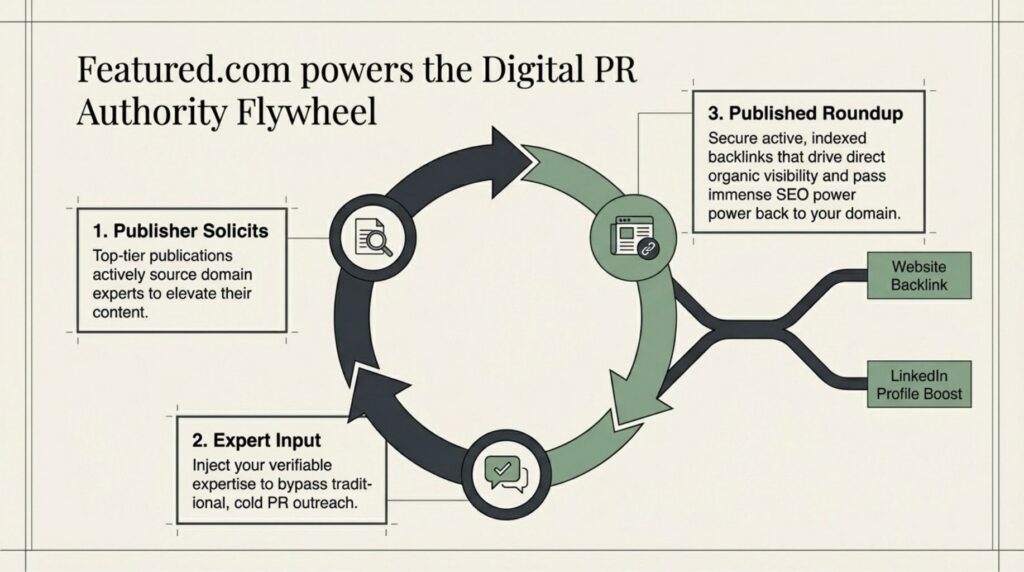
The other dimension is AI indexing. Platforms like Perplexity and ChatGPT actively index roundup articles and expert contribution pages. When your name and expertise appear in those contexts, you’re building citation potential not just for traditional search but for the AI systems that are increasingly the first stop for information queries.
Our approach is systematic. Our team monitors Featured.com for incoming requests that match our areas of expertise, drafts contributions, submits them, and tracks placements. Over time, this builds a documented trail of third-party expert recognition that reinforces every other E-E-A-T signal we’re building. If you’re an expert in your field and you’re not using Featured.com, you’re leaving authority on the table.
Your Google Knowledge Panel Is a GEO Signal You’re Probably Ignoring
One of the most underused E-E-A-T moves available to anyone with a public presence is claiming your Google Knowledge Panel. If you’ve been publishing content consistently and Google has some sense of who you are as an entity, you likely already qualify for one.
Go search for your name right now. If a knowledge panel appears on the right side of the results page, that’s Google acknowledging you as a known, structured entity in their database. Claiming it means verifying that the information in that panel is accurate and that you are the person it represents. Once claimed, you can suggest edits to ensure everything Google knows about you is correct and complete.
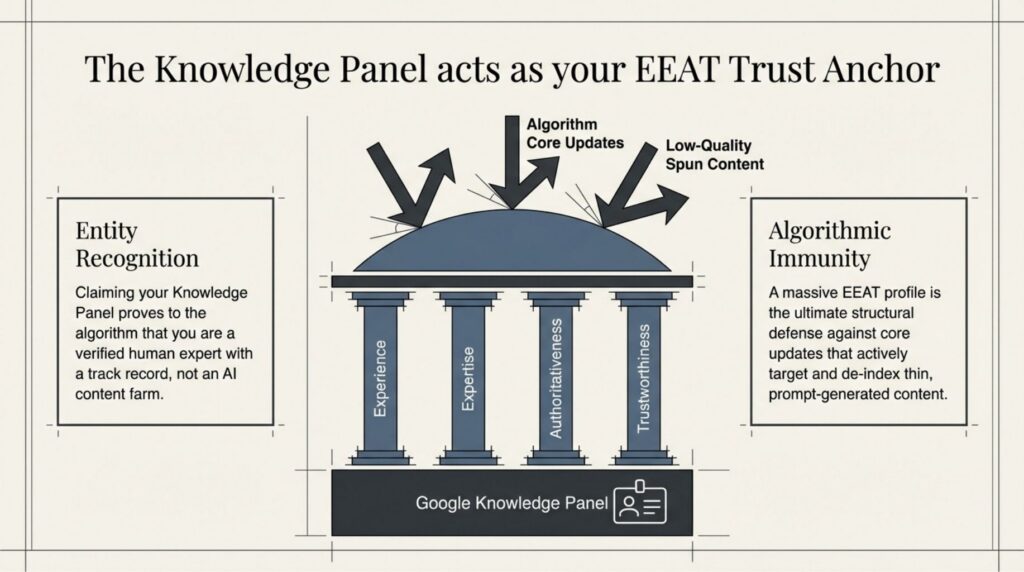
Why does this matter for GEO? Because AI systems, including Google’s own, draw heavily from structured entity data. When you have a verified knowledge panel, you’re telling Google and the AI systems that pull from its data: this is a real, verified person with documented expertise. That’s the foundation of E-E-A-T, Experience, Expertise, Authoritativeness, and Trustworthiness. Building a strong entity signal isn’t just an SEO tactic. It’s the infrastructure that makes everything else you do more credible in the eyes of AI systems.
A lot of people skip this because it seems like a small thing. It isn’t. A verified knowledge panel is one of the clearest signals you can send that you are a legitimate, established expert in your field. And it costs nothing but a few minutes to set up.
The March 2026 Core Update Is Live, and E-E-A-T Is the Theme
Google released the first major core algorithm update of 2026 this week. If you haven’t checked your rankings and Search Console data yet, do it today.
Core updates recalibrate how Google evaluates content quality across the entire index. Pages that were ranking well can drop, and pages that were underperforming can rise, often without any changes to the content itself. What we know from the direction of core updates over the past several years is consistent: Google is getting better at identifying thin content, AI-generated content that lacks genuine human expertise, and pages that exist primarily to rank rather than to genuinely help users.
Putting the GEO Visibility Stack Together
Here’s how these three signals work together, and why the combination is more powerful than any single tactic on its own.
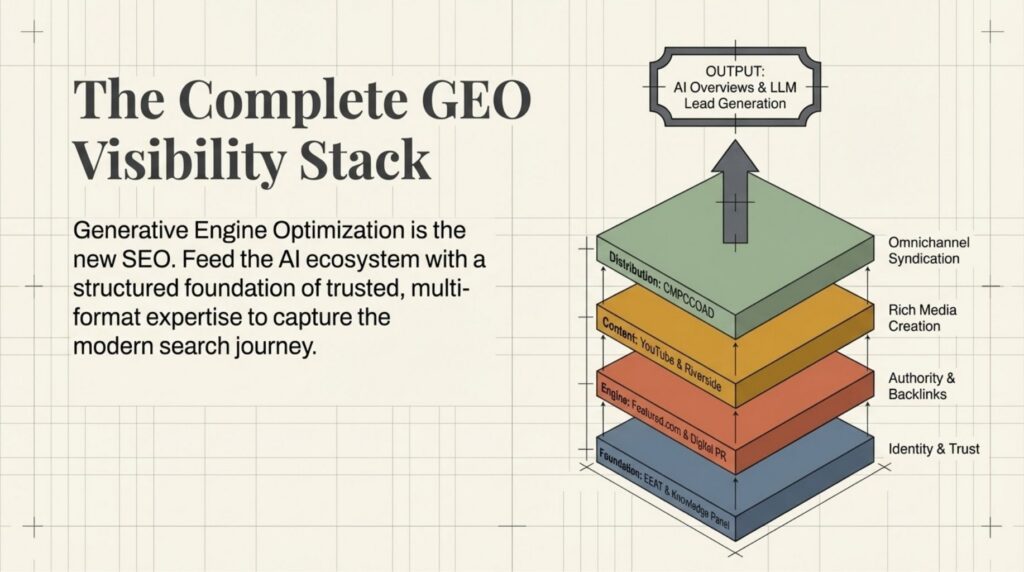
YouTube establishes your video presence on the platform Google most frequently cites in AI Overviews. Featured.com earns you expert mentions and active backlinks on third-party authoritative publications. Your Knowledge Panel signals to Google that you are a verified, trusted entity, giving AI systems a structured, reliable source of information about who you are and what you’re known for.
None of these in isolation is a silver bullet. A YouTube channel without third-party authority signals is a starting point, not a strategy. Featured.com contributions without a verified entity presence are helpful but incomplete. A Knowledge Panel without supporting content across platforms lacks the reinforcement that makes the signal stick.
Together, they create a layered signal profile. AI systems encounter your name on YouTube, see it cited in third-party publications, find a verified knowledge panel confirming your entity, and encounter your content across multiple platforms. That pattern of consistent, multi-source expert recognition is what gets you cited and drives GEO visibility in a way that compounds over time.
What to Do Next
Start with the Knowledge Panel. Search your name today and claim it if it’s there. That’s a 15-minute task with lasting impact.
Then look at your YouTube cadence. If you’re not publishing at least one video per week on topics your audience is searching for, that’s the gap to close. Use Riverside to make the recording process easier.
Then set up a Featured.com account and start browsing requests in your area of expertise. Commit to submitting contributions consistently, not just once and waiting.
If you want a full GEO audit and a clear picture of your visibility gaps, reach out to us. We’ll walk through your specific situation and show you exactly where to focus.
And if you want to go deeper on all of this, join us at our upcoming free AI SEO & GEO Online Summit. Brett Formello, CEO of Featured.com, will be there alongside Dennis Yu, CEO of BlitzMetrics, Josh Steimle, CEO of MWI, Daniel Burns, COO, and Harold De Guzman, Head of AI Research at Boulder SEO Marketing. Register at chrisraulf.com/ai-seo-geo-summit.
Have an amazing Friday and a great weekend.
Stay safe and healthy,
Cheers,
The Boulder SEO Marketing Team